
- Reduced price
- New
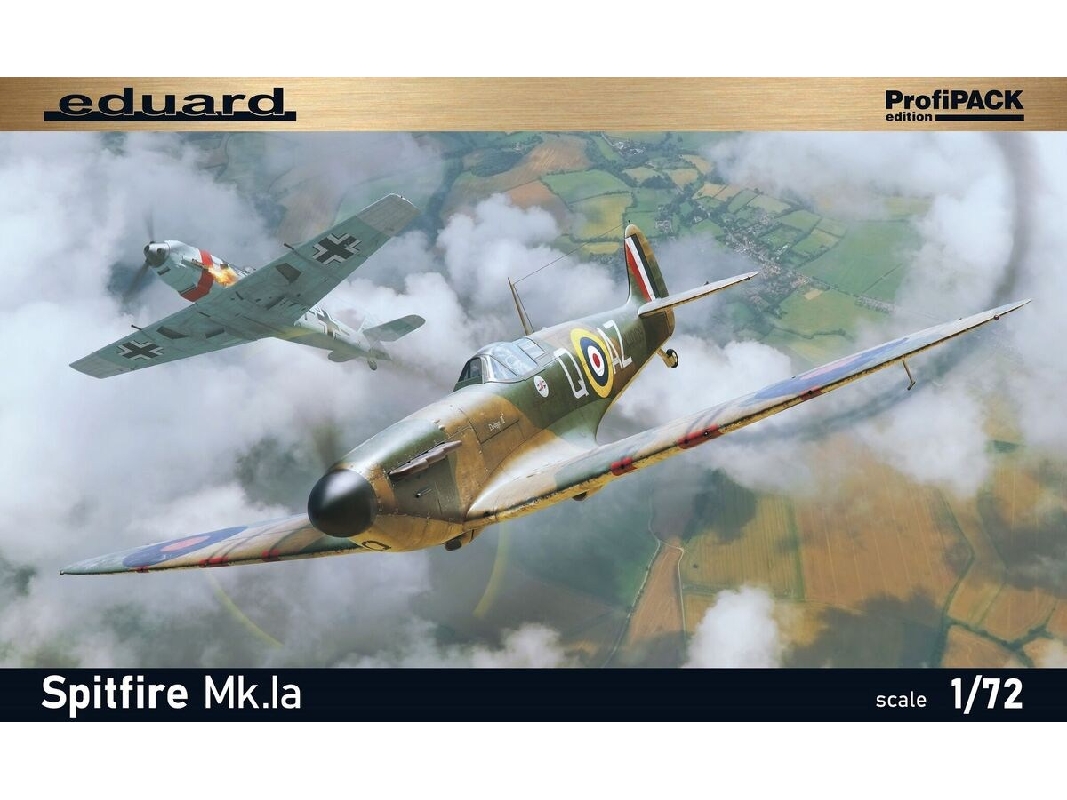
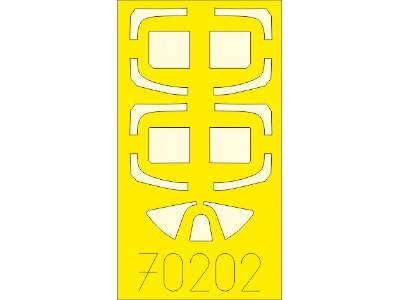
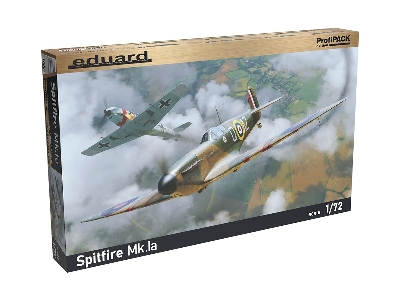
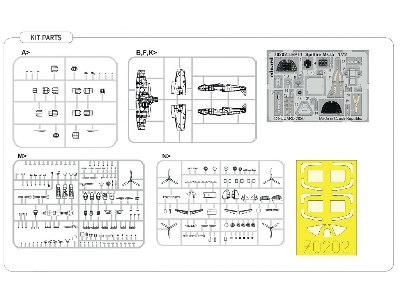
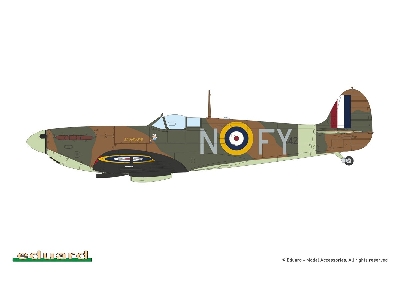
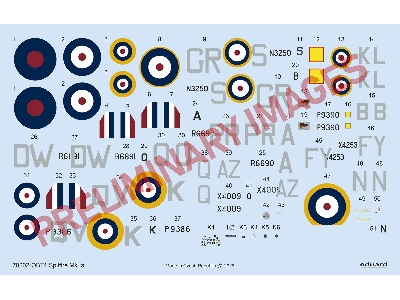
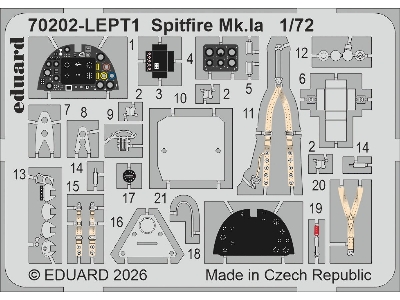
This kit allows you to build a detailed model of one of the most recognizable British fighters of World War II – the Supermarine Spitfire Mk.Ia. It is a ProfiPACK edition combining plastic model parts with photo-etched details and masks for painting the canopy.
The model represents an early version of the Spitfire that played an important role during the first years of the war, including the Battle of Britain. The kit reproduces characteristic features of this variant, including its wing-mounted armament and cockpit configuration.
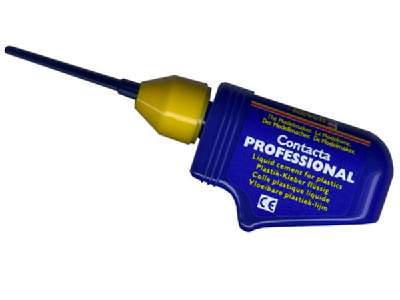
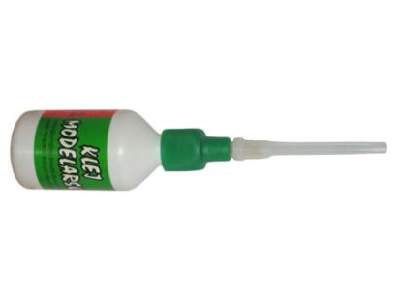
The model is intended for self-assembly and painting. Glue and paints are not included and must be purchased separately.
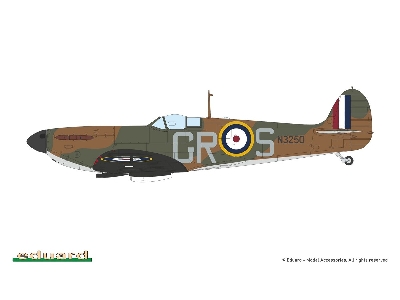
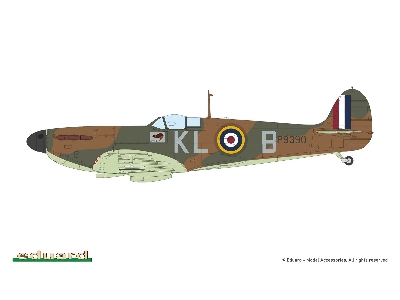
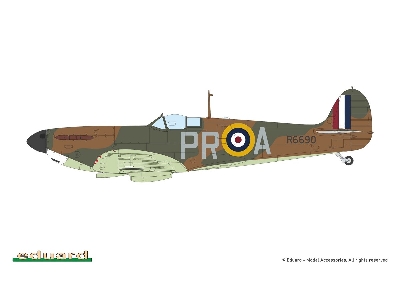
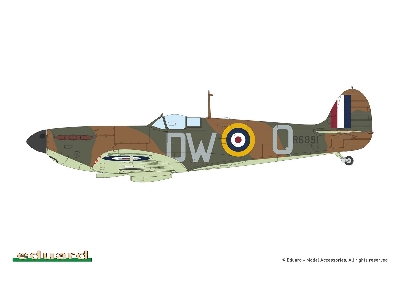
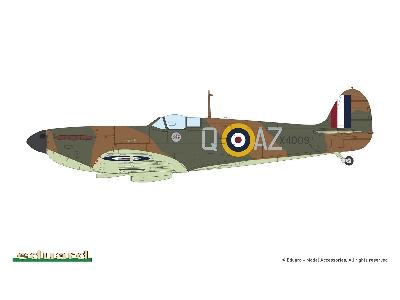
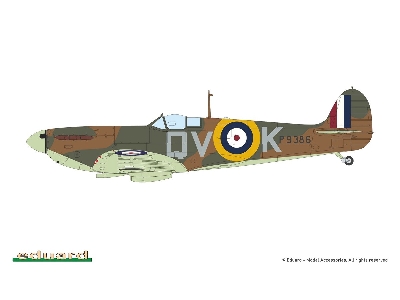
The decals allow you to reproduce seven specific Spitfire Mk.Ia aircraft associated with RAF pilots and squadrons. Most of the aircraft represent the period of the Battle of Britain or the months immediately preceding it.
The Supermarine Spitfire was designed by a team led by Reginald J. Mitchell as a modern single-seat interceptor for the Royal Air Force. The K5054 prototype made its first flight on March 5, 1936. Its distinctive elliptical wing combined a thin aerodynamic profile with low drag, contributing to the aircraft's excellent performance.
The first production Spitfire Mk.Is entered service with No. 19 Squadron in August 1938. By the outbreak of World War II, the RAF had nine squadrons equipped with the type, and by July 1940 the number of Spitfire Mk.I squadrons had increased to nineteen.
The Mk.Ia was a development of the first production Spitfires. The aircraft was powered by a Rolls-Royce Merlin III engine and equipped with a three-bladed constant-speed propeller, which improved performance, particularly during climb. It also received the modern VHF TR.1133 radio. The cockpit featured an improved canopy arrangement and a rear-view mirror mounted on the forward canopy frame.
One of the most characteristic features of early Spitfires was their armament of eight Browning 7.7 mm machine guns, with four installed in each wing. This arrangement provided a considerable volume of fire against fighter-sized targets, although combat experience soon demonstrated the limited effectiveness of rifle-calibre ammunition against heavier aircraft protected by armour and self-sealing fuel tanks.
Performance figures varied depending on the exact aircraft configuration, propeller and test conditions. For the Spitfire Mk.I powered by the Merlin III, the Royal Air Force Museum gives a maximum speed of 583 km/h and a service ceiling of approximately 9,723 m.
The Spitfire Mk.I became one of the symbols of the Battle of Britain. Although Hurricanes made up the larger part of Fighter Command's strength, the Spitfire offered superior performance and was capable of effectively challenging the German Messerschmitt Bf 109E. The Royal Air Force Museum describes the Mk.I as the only British fighter in 1940 capable of facing the Bf 109E on equal terms.
During 1940, a number of improvements were gradually introduced, including constant-speed propellers and the use of 100-octane aviation fuel. These modifications provided further performance improvements without requiring a complete redesign of the aircraft.
The eight Browning 7.7 mm machine guns were installed in the wings and positioned to concentrate their fire ahead of the aircraft. In the mid-1930s, such armament was considered highly advanced for a single-seat fighter.
Combat experience soon showed that greater firepower was required against heavier multi-engined aircraft. Trials with 20 mm Hispano cannon led to the development of the Mk.Ib, although early reliability problems initially limited the operational use of the cannon.
In addition to the plastic model parts, the kit includes pre-painted color photo-etched parts and masks for painting the canopy. Decals are also provided for seven marking options. The kit does not contain resin components.
Yes. Most of the marking options represent aircraft operated in Great Britain during 1940, including aircraft used by squadrons that took part in the Battle of Britain. The last of the seven options dates from February 1941.
No. The model is intended for self-assembly and painting, so glue and paints must be purchased separately.
No carriers available for this product.
The above shipping costs are for 1 item only.
You will see the final shipping costs when you place your order.
@COMMENT_COMMENT@
@COMMENT_COMMENT@



@COMMENT_TITLE@
@COMMENT_COMMENT@