


- Reduced price
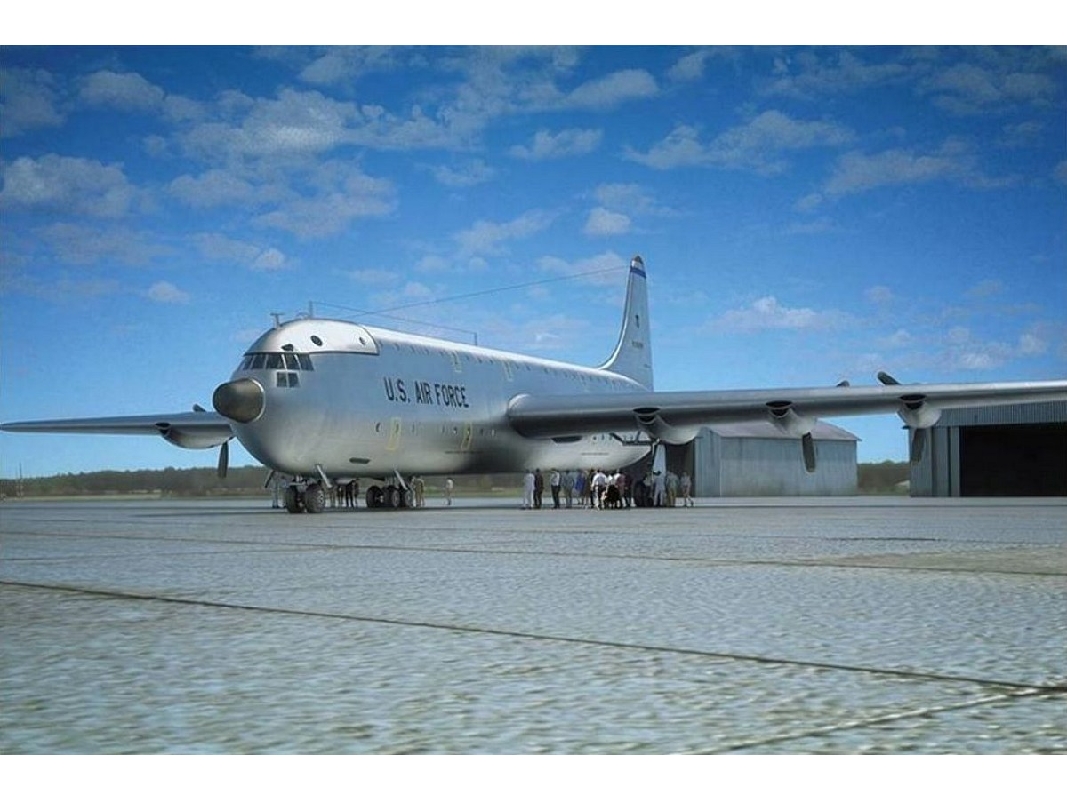

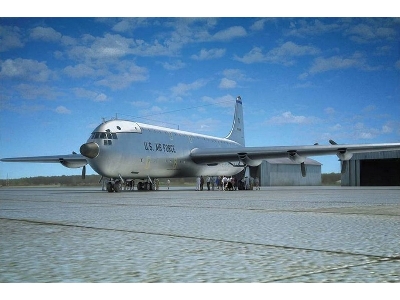
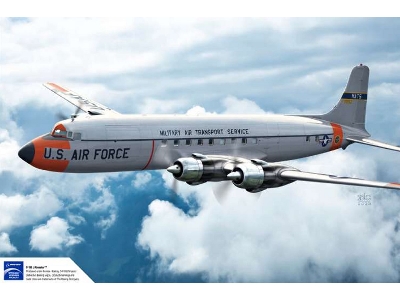
This model depicts the Convair XC-99, one of the most remarkable American transport aircraft of the early post-war period. Developed from the B-36 Peacemaker, it combined the wings and propulsion system of the giant bomber with a completely new double-deck cargo fuselage. The result was an enormous aircraft designed to carry exceptionally heavy loads over long distances.
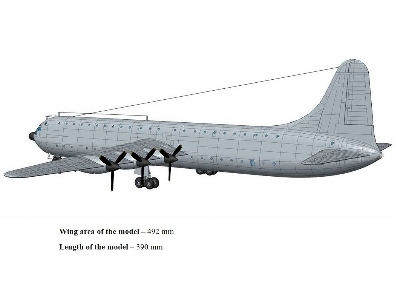
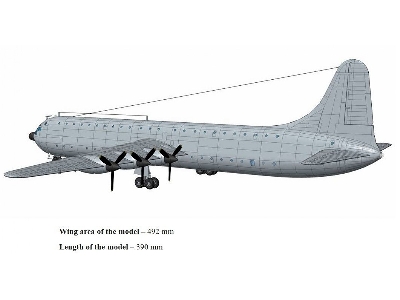
The model captures the distinctive appearance of this unique aircraft, including its unusually large double-deck fuselage, high-mounted wings and six-engine pusher arrangement. The characteristic rear-facing engines and large propellers make the XC-99 immediately recognisable and give the finished model a particularly unusual appearance.
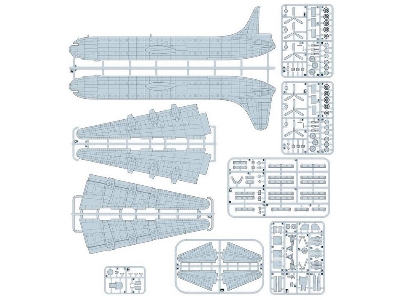
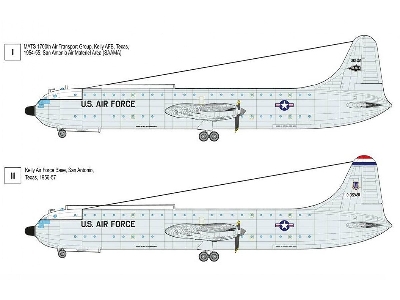
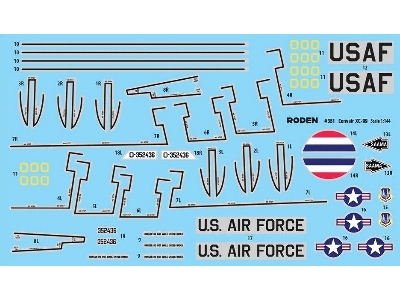
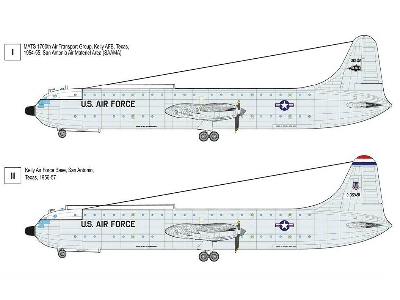
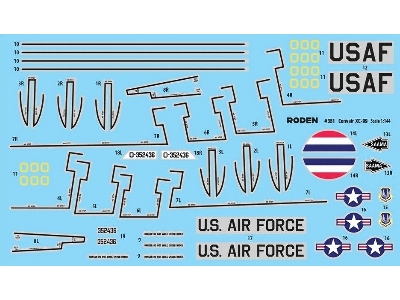
The kit includes parts and decals for two aircraft markings representing the XC-99 during its operational career with the United States Air Force. The subject is especially attractive to modellers interested in unusual aircraft, early Cold War aviation and prototypes that never reached series production.
The Convair XC-99 was conceived as a super-heavy transport aircraft capable of carrying loads far beyond the capacity of conventional transports of the period. Its design was based on the idea of using as many components of the B-36 as possible, reducing the amount of completely new development required.
The most significant new element was the fuselage. Instead of the bomb bay and crew compartments of the bomber, the XC-99 featured a huge double-deck cargo interior. The two decks provided an enormous amount of usable space, while a cargo lift made it possible to move heavy equipment between the levels.
The aircraft was designed to carry up to 100,000 pounds of cargo, approximately 45 tonnes, or as many as 400 fully equipped troops. These figures were extraordinary for the late 1940s and made the XC-99 one of the most capable transport aircraft in existence at the time.
The origins of the XC-99 can be traced to the development of the XB-36 strategic bomber. During the early 1940s, Convair proposed using the bomber's wings and other structural components as the basis for a very large transport aircraft.
The new aircraft received the designation XC-99 and was given a completely new fuselage. Although the wings and engines were closely related to those of the B-36, the transport aircraft was otherwise a very different machine, designed around its enormous cargo capacity rather than long-range bombing.
The prototype, carrying serial number 43-52436, made its first flight on 24 November 1947 from San Diego, California. Testing continued until 1949, after which the aircraft was delivered to the United States Air Force.
One of the most striking features of the XC-99 was its propulsion system. Six powerful radial engines were mounted in the wings with their propellers facing backwards. Instead of pulling the aircraft through the air, the propellers pushed it forward.
The arrangement was inherited from the B-36 and was particularly well suited to the aircraft's large wing. The six engines produced an enormous combined power output, allowing the XC-99 to carry very heavy loads despite its considerable size.
The original aircraft was powered by Pratt & Whitney R-4360 Wasp Major engines, among the largest and most powerful piston engines ever produced in quantity. Each engine had 28 cylinders arranged in four rows and drove a large reversible-pitch propeller.
Following extensive testing, the XC-99 was accepted by the U.S. Air Force in 1949. Unlike many experimental aircraft of the period, it did not remain merely a test machine. It was subsequently used for regular transport operations and proved that its enormous cargo capacity could be put to practical use.
The aircraft began operational cargo missions in July 1950. One of its first major missions, known as Operation Elephant, involved transporting more than 100,000 pounds of cargo from San Diego to Kelly Air Force Base in Texas. Much of the cargo consisted of engines, propellers and other components required for B-36 bombers.
The XC-99 later received several modifications intended to improve its usefulness as a transport aircraft. These included strengthened landing gear, improved cargo-handling equipment and changes to the propulsion system. The internal cargo lift made it considerably easier to load and unload heavy equipment.
The XC-99 was particularly valuable during the period of the Korean War. Its enormous cargo capacity allowed it to transport large quantities of equipment and aircraft components that would otherwise have required numerous smaller aircraft.
The aircraft operated from Kelly Air Force Base and became an important part of the American military transport system. It was also used to transport equipment and supplies over long distances, demonstrating that the unusual design could perform useful operational work rather than simply serving as a technological experiment.
One of the most impressive flights took place in 1953, when the XC-99 flew to Rhein-Main Air Base in West Germany. The aircraft travelled via Bermuda and the Azores, covering approximately 12,000 miles on the journey.
The flight demonstrated the enormous range and cargo-carrying capability of the aircraft. It also showed how a machine originally conceived as an experimental heavy transport could be used for strategic logistics during the early Cold War.
Despite its impressive capabilities, the XC-99 remained a one-off prototype. The U.S. Air Force decided that it did not require a large fleet of aircraft of this size, while the rapid development of turboprop and jet propulsion was already changing the future of military aviation.
The six large piston engines consumed considerable amounts of fuel and oil, making the aircraft expensive to operate. At the same time, newer transport aircraft were becoming faster, more economical and more practical for routine military service.
Convair also considered a civilian passenger version known as the Model 37. This projected aircraft would have retained the characteristic double-deck fuselage and could have carried more than 200 passengers. Although Pan American Airways expressed interest and plans were developed for a production version, the project was ultimately cancelled and no Model 37 was built.
The sole XC-99 continued flying until 1957. During its career it accumulated more than 7,400 flight hours and transported more than 60 million pounds of cargo. Its operational career was therefore far more substantial than that of a typical experimental prototype.
The aircraft made its final flight in March 1957 and was subsequently withdrawn from service. Although only one example was ever constructed, the XC-99 demonstrated the possibilities of extremely large military transports at a time when the technology of heavy air transport was developing rapidly.
The XC-99 is an excellent subject for anyone interested in unusual aircraft and the transition from wartime to Cold War aviation. Its enormous double-deck fuselage, six pusher engines and close relationship with the B-36 make it very different from conventional transport aircraft of the period.
The model can be displayed as a standalone aircraft, where its unusual proportions and distinctive propulsion system are particularly striking. It also lends itself well to a Cold War airfield diorama, accompanied by ground crew, cargo equipment, aircraft components and military vehicles.
The two marking options included in the kit make it possible to represent the aircraft during different stages of its operational career, from its service with the MATS 1700th Air Transport Group in the mid-1950s to its final years at Kelly Air Force Base.
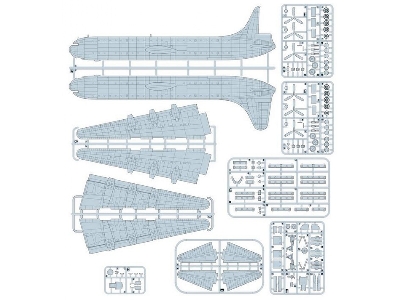
Note: The kit is supplied unassembled and unpainted. Glue and paints are not included.

No carriers available for this product.
The above shipping costs are for 1 item only.
You will see the final shipping costs when you place your order.

Manufacturer
Responsible person
@COMMENT_COMMENT@
@COMMENT_COMMENT@
@COMMENT_TITLE@
@COMMENT_COMMENT@