
- Reduced price
- New
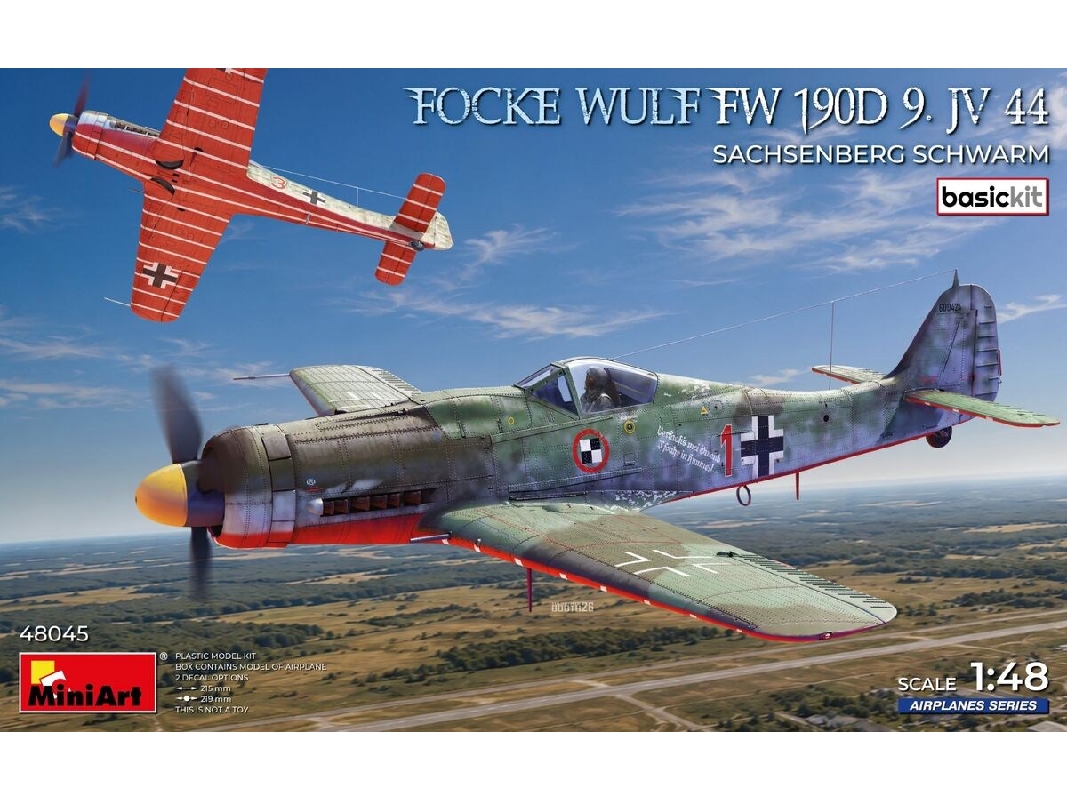

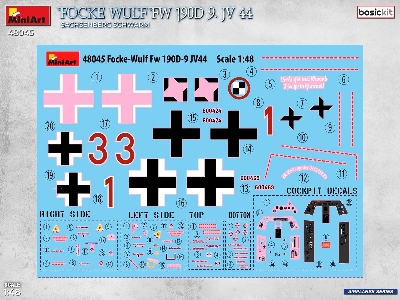
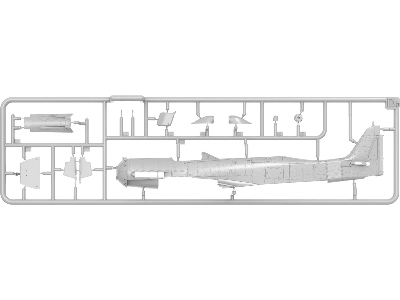
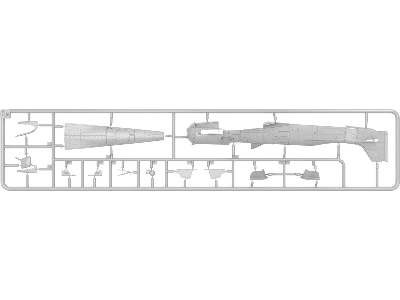
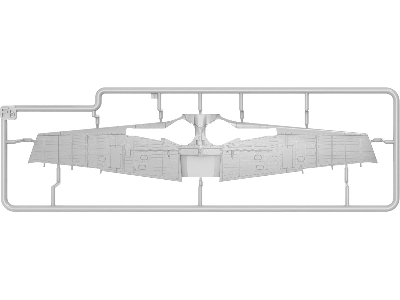
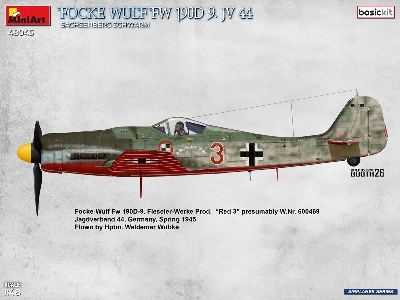
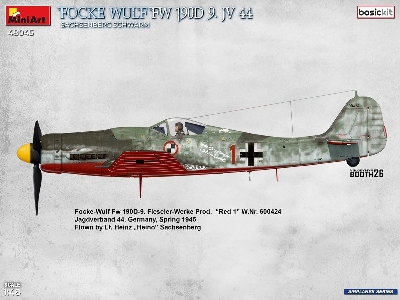
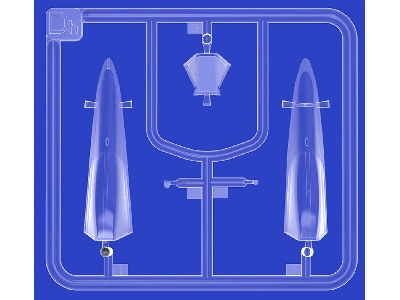
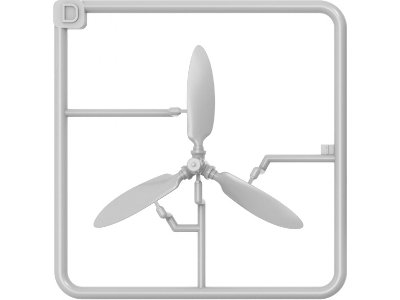
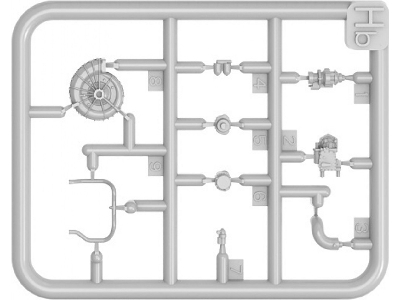
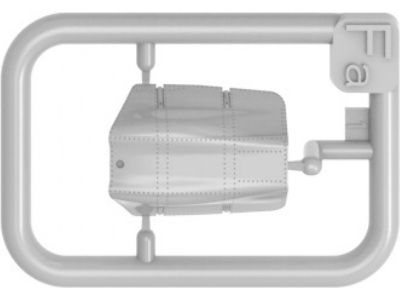
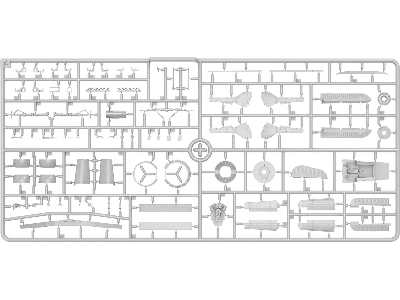
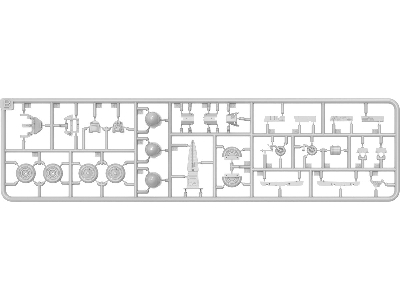
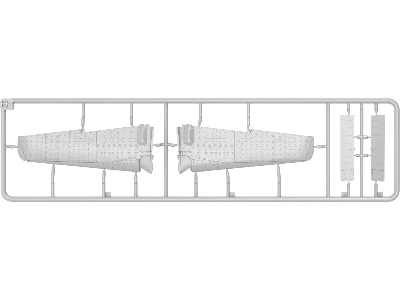
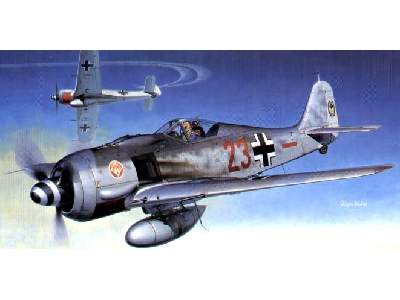
A plastic model kit for assembly and painting, depicting the German Focke-Wulf Fw 190D-9 fighter aircraft in the distinctive livery of the Jagdverband 44 unit. The kit includes decals allowing for the creation of one of two marking variants from the spring of 1945.
Both aircraft belonged to the JV 44 unit and were operated in Germany during the spring of 1945. The "Red 3" variant is distinguished by the inscription "Im Auftrage der Reichsbahn" (On behalf of the Reichsbahn) on the fuselage.
The Focke-Wulf Fw 190 was one of the most important German fighter aircraft of World War II. Designed by Kurt Tank's team, it entered service in 1941 and complemented the Messerschmitt Bf 109. The radial-engined versions performed particularly well at low to medium altitudes.
As the performance of Allied fighter aircraft improved, the need arose to enhance the Fw 190's high-altitude capabilities. The answer was the D-series, the most widely produced variant of which was the Fw 190D-9, nicknamed "Dora" by pilots. Serial production began in 1944, and the first units reached combat squadrons in the autumn of that same year.
The most significant change compared to earlier Fw 190A versions was the use of the Junkers Jumo 213A inline engine instead of the air-cooled BMW 801 radial engine. This modification required lengthening the forward fuselage and redesigning the rear fuselage to maintain the aircraft's proper balance.
The Jumo 213A was a liquid-cooled, 12-cylinder inverted-V engine. When paired with a refined airframe, it delivered superior high-altitude performance compared to earlier Fw 190 variants. However, the D-9 retained many design features of its predecessors, facilitating the use of existing production and maintenance expertise.
The Fw 190D-9 was characterized by a good rate of climb, high level flight speed, and favorable diving characteristics. Compared to the earlier Fw 190A variants, it offered superior high-altitude performance, although the change in powerplant resulted in some differences in handling characteristics.
Jagdverband 44 was a special Luftwaffe fighter unit formed during the final stages of the war under the command of General Adolf Galland. Its primary mission was to conduct combat operations using jet-powered Messerschmitt Me 262s.
The Me 262 achieved very high speeds, but its jet engines responded more slowly to throttle changes than piston engines. Consequently, the aircraft was particularly vulnerable to attacks by Allied fighters during takeoff and landing.
Fw 190D-9s belonging to a special airfield protection flight—known as the "Sachsenberg Schwarm"—were used to guard airfields and provide cover for jet aircraft during these critical phases of flight.These aircraft patrolled the areas surrounding the airfields and the approach paths to intercept adversaries attempting to attack Me 262s during takeoff or landing. This represented an unusual role for a modern piston-engine fighter, which was supporting jet aircraft in the final weeks of the war.
The aircraft of the JV 44 airfield protection flight were distinguished by a characteristic paint scheme on the undersides of their wings: a red background with white stripes. These markings were intended to allow German anti-aircraft defenses to recognize their own fighters operating at low altitude near the airfields.
Some aircraft also bore individual inscriptions and emblems. The aircraft "Red 3," attributed to Waldemar Wübke, featured the inscription "Im Auftrage der Reichsbahn"—meaning "On behalf of the Reichsbahn" (the Reich Railway). This was an example of the distinctive style associated with this unit.

No carriers available for this product.
The above shipping costs are for 1 item only.
You will see the final shipping costs when you place your order.
@COMMENT_COMMENT@
@COMMENT_COMMENT@

@COMMENT_TITLE@
@COMMENT_COMMENT@