


- Reduced price
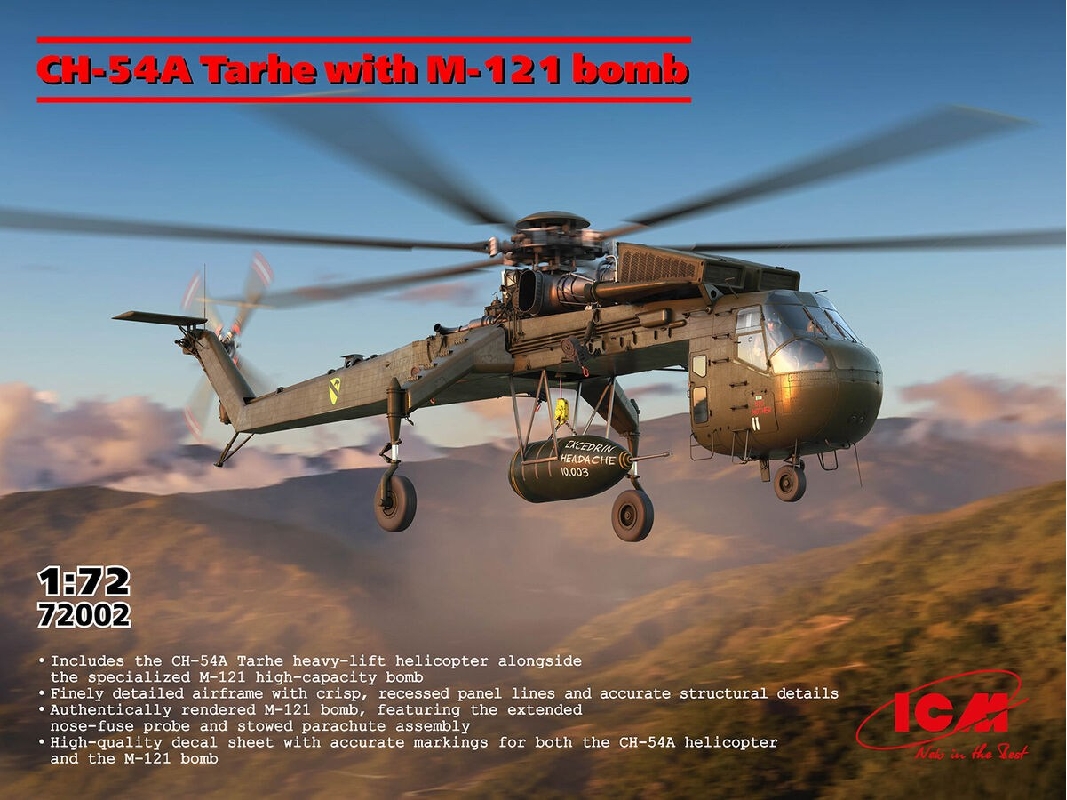

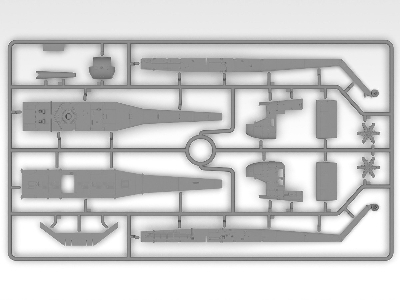
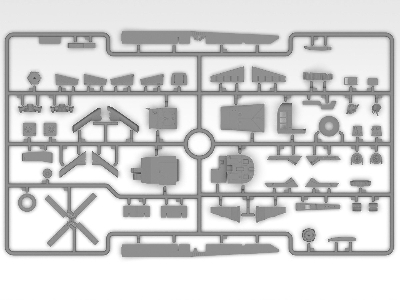
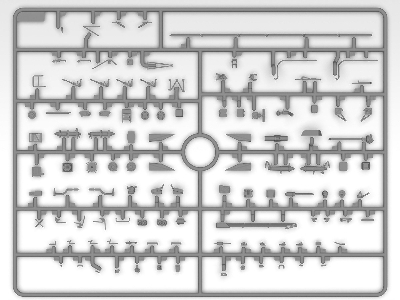
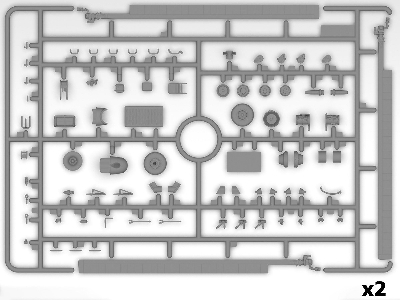
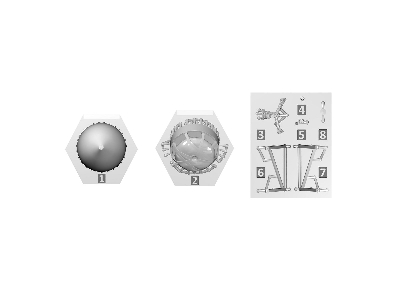
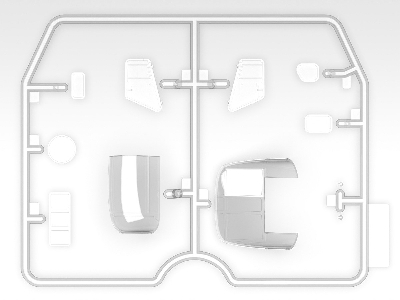
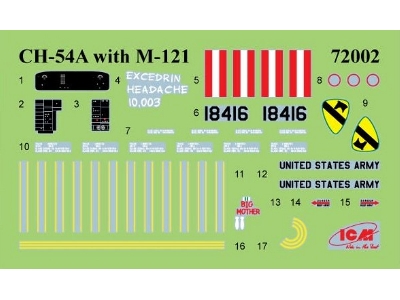
The Sikorsky CH-54A Tarhe with M-121 bomb by ICM is a detailed model of the CH-54A Tarhe heavy-lift transport helicopter, featuring the distinctive configuration with a suspended M-121 high-yield bomb—a weapon used by the US Army during the Vietnam War. The kit comprises 338 parts for the helicopter and 8 parts for the bomb. Once assembled, the model measures approximately 376 mm in length and 271 mm in width.
The model accurately reproduces the distinctive design of the CH-54A Tarhe, featuring the open space beneath the fuselage intended for transporting heavy loads. The kit also includes the specialized suspension system for the M-121 bomb, as well as the bomb itself, complete with an extended fuze probe and a complex stabilizing parachute.
The M-121 replica includes details specific to the version adapted for deployment from the CH-54A.
The bomb can be displayed suspended beneath the helicopter, recreating a characteristic configuration used during special missions in Vietnam.This model requires assembly and painting. Glue and paints are not included in the kit and must be purchased separately. Plastic model glue and appropriate model paints are required for construction.
The Sikorsky CH-54A Tarhe was a heavy-lift transport helicopter developed in the United States to carry very heavy and unusual loads. Its distinctive design—lacking a conventional cargo fuselage—provided ample clearance beneath the helicopter and allowed equipment to be slung directly under the central airframe.
The CH-54A saw extensive service with the U.S. Army during the Vietnam War. These helicopters transported vehicles, artillery pieces, engineering machinery, and other heavy loads that could not easily be moved by standard transport helicopters. Excellent visibility of the underslung load and precise maneuverability made the Tarhe highly effective for operations requiring the accurate placement of equipment in hard-to-reach locations.
One of the more unusual missions for the CH-54A involved carrying the heavy M-121 bomb. This weapon was used to rapidly create helicopter landing zones in the densely forested regions of Vietnam. Instead of spending hours clearing terrain with heavy machinery, the bomb's explosion was intended to quickly open up a sufficiently large space for helicopter operations.
Adapting the M-121 for airdrop from the CH-54A required specific modifications. The bomb's aft section and conventional stabilizers were removed and replaced with a special stabilization parachute. An extended nose probe housed the fuze designed to trigger detonation at a height of approximately one meter above the ground. At the end of the probe was a small propeller mechanism designed to arm the fuze as the bomb descended.
Dropping the M-121 required a highly precise execution of the mission. A typical sortie involved four passes over the designated target. During the first three passes, the crew dropped smoke markers to determine the effect of the wind on the flight path. The pilot in the rear seat also served as the bombardier; observing the drift of the smoke, he relayed course correction instructions to the pilot flying the aircraft. The bomb was released during the fourth pass, after which the pilot executed a steep climb to move the helicopter away from the blast site.
The M-121 remained in service until stocks were exhausted. The last operational drop of this

No carriers available for this product.
The above shipping costs are for 1 item only.
You will see the final shipping costs when you place your order.

Manufacturer
Responsible person
@COMMENT_COMMENT@
@COMMENT_COMMENT@


@COMMENT_TITLE@
@COMMENT_COMMENT@