

- Reduced price


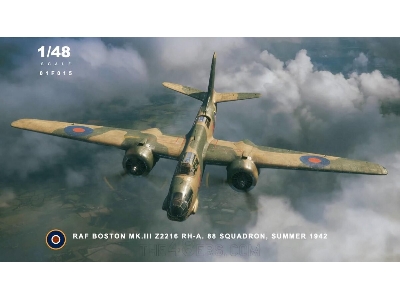
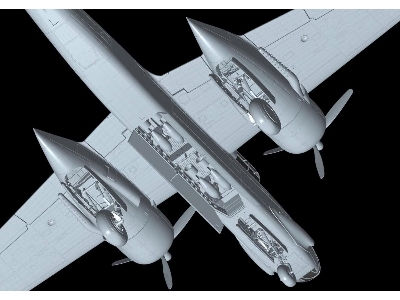
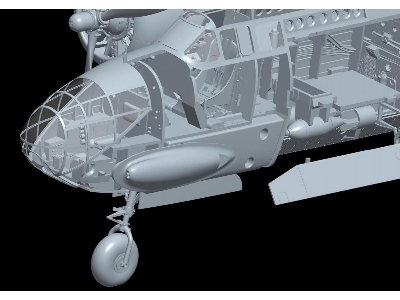
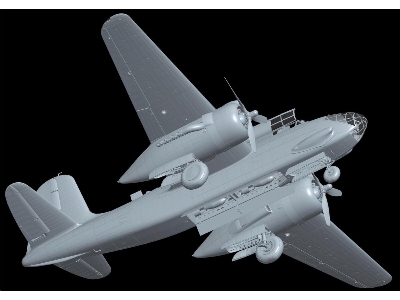
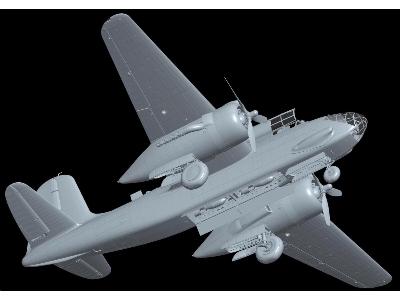
Douglas DB-7B Boston Mk.III from HK Models is a highly detailed model of the American light bomber developed for Allied air forces during the early stages of the Second World War. The 1:48 scale kit represents the DB-7B variant, known in Royal Air Force service as the Boston Mk.III, with its characteristic glazed nose for the bombardier.
The model consists of 254 parts and features finely reproduced aircraft surfaces, delicate panel lines and subtle rivet detail. The kit also includes photo-etched parts, metal landing gear struts and nose weights to ensure the completed model sits correctly on its landing gear.
The model features a detailed crew compartment, including the pilots' cockpit and bombardier's position. The engine nacelles and landing gear bays are also carefully reproduced, while the rear gunner's position adds further detail to the interior.
The control surfaces are movable, and the bomb bay doors can be positioned open, allowing the modeller to display the aircraft with its internal bomb load visible. Four 500 lb bombs are included in the kit.
Metal landing gear struts provide additional strength for the completed model, while the nose weights ensure the correct balance when the aircraft is displayed on its wheels. Photo-etched parts are included to enhance smaller details throughout the model.
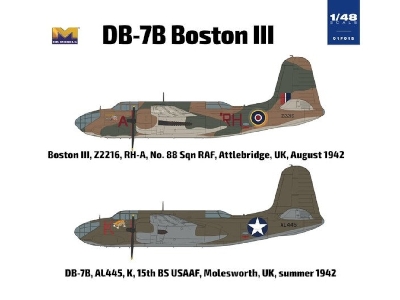
The decals are printed by Cartograf and provide markings for two aircraft operated in 1942. Both options represent aircraft based in the United Kingdom during the early part of the war.
The model is supplied unassembled and requires gluing and painting. Construction requires plastic model cement, while cyanoacrylate adhesive is recommended for attaching the photo-etched parts. Paints and adhesives are not included.
The Douglas DB-7 was an American twin-engined light bomber and ground-attack aircraft developed by the Douglas Aircraft Company. The design was created in the late 1930s and quickly attracted interest from foreign customers. DB-7 aircraft were supplied to France and Great Britain, and after the outbreak of war they saw service with several Allied air forces.
In Royal Air Force service, bomber versions of the DB-7 were known as Boston, while aircraft adapted for other roles, particularly night fighters and attack missions, were designated Havoc. In American service the aircraft was designated the A-20 Havoc.
The DB-7B was the first version of the A-20 ordered directly by the Royal Air Force. The first order for this variant was placed in February 1940. Compared with earlier versions, the aircraft received larger fuel tanks and additional armour, making it better suited to the RAF's requirements for a light bomber.
The name Boston was first officially associated with this group of aircraft. Earlier DB-7s originally ordered for France had already entered RAF service and were designated Boston Mk.II, while the DB-7B became the Boston Mk.III.
The Boston Mk.III was used by the RAF for bombing ground targets and low-level operations. Its good performance and relatively high speed made it particularly useful for fast attacks against targets within range of German fighter aircraft and anti-aircraft defences.
Bostons took part in attacks on the German warships Scharnhorst, Gneisenau and Prinz Eugen during their passage through the English Channel in Operation Cerberus. Aircraft of the type also participated in Operation Jubilee, the Allied raid on Dieppe in August 1942.
Approximately 300 Boston Mk.III aircraft were produced. Aircraft of the DB-7/A-20 family also served with other Allied air forces, while later variants were used in a wide range of roles including bomber, ground attack, night fighter and reconnaissance missions.

No carriers available for this product.
The above shipping costs are for 1 item only.
You will see the final shipping costs when you place your order.

Manufacturer
Responsible person
@COMMENT_COMMENT@
@COMMENT_COMMENT@
@COMMENT_TITLE@
@COMMENT_COMMENT@