
- Reduced price
- New
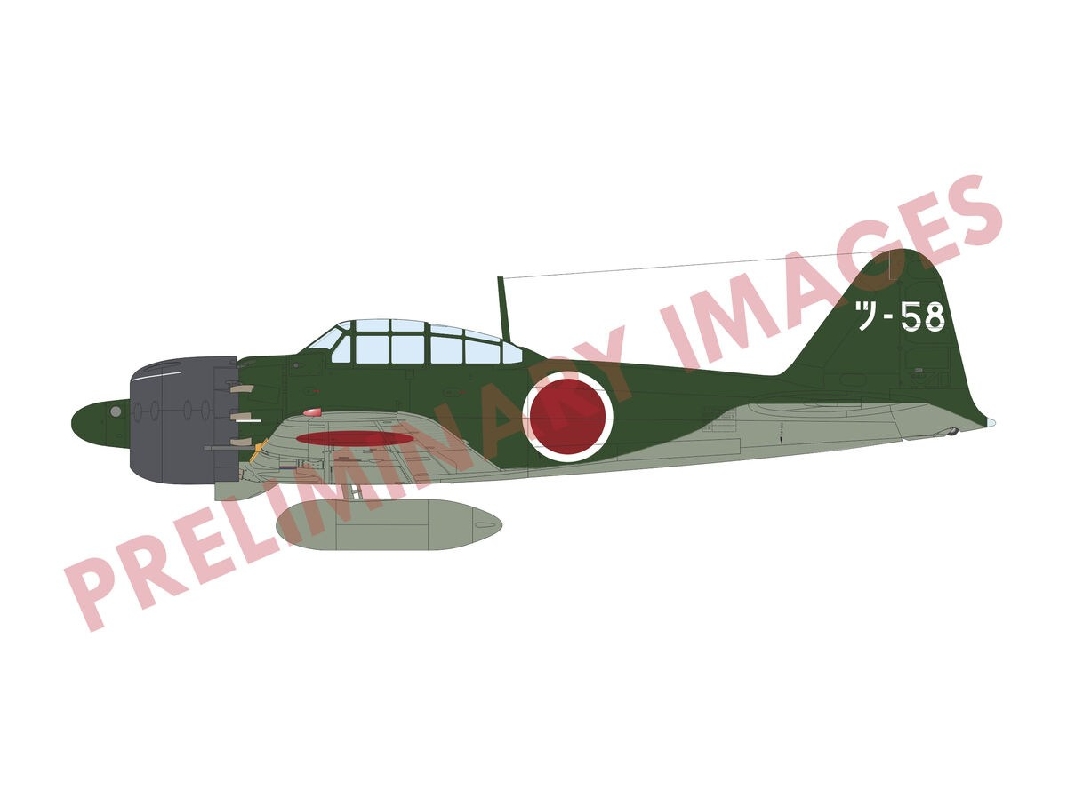

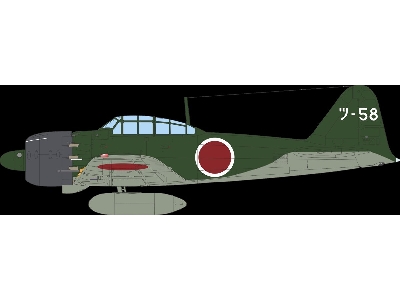
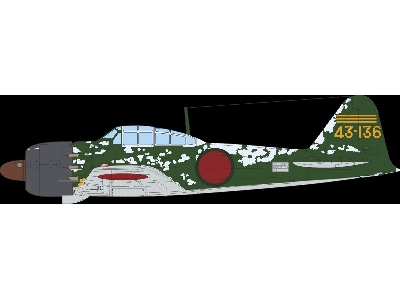
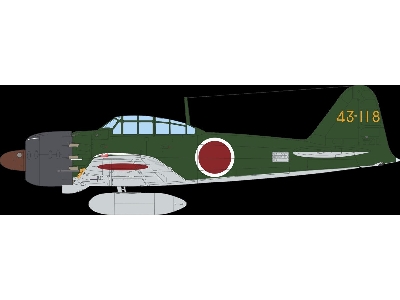
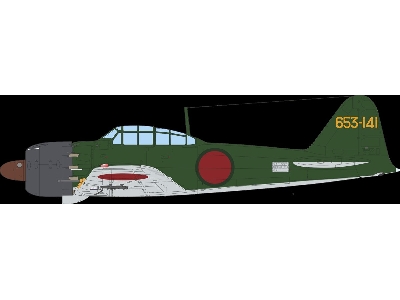
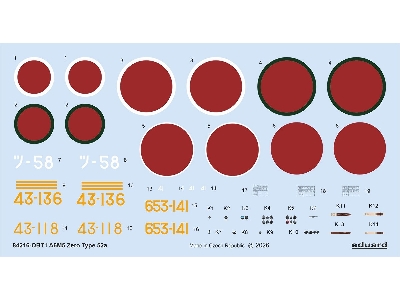
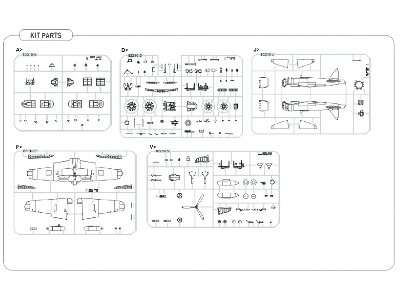
This kit allows you to build a model of the Japanese carrier-based fighter Mitsubishi A6M5 Zero Type 52a in a late production variant. It is a "Weekend Edition" release, designed for modelers who want to build a complete model without the extra components found in the more comprehensive "ProfiPACK" editions.
The kit includes decals for four marking variants representing aircraft used by Japanese naval aviation units. These include aircraft associated with the Tsukuba Kōkūtai, Kōkūtai 343, and Kōkūtai 653, among others.
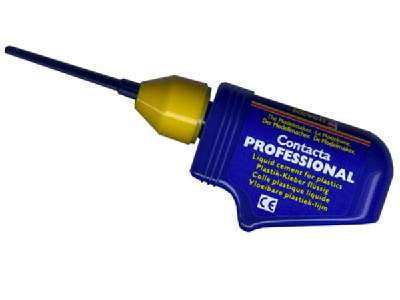
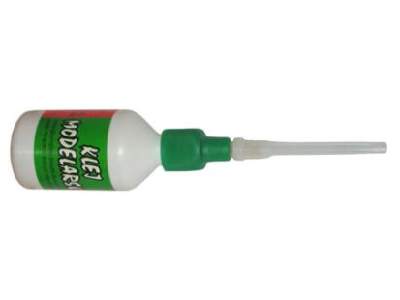
The model requires assembly and painting. Glue and paints are not included in the kit and must be purchased separately.
The Mitsubishi A6M Zero was a single-seat, single-engine carrier-based fighter used by the Japanese Navy. The prototype made its first flight on April 1, 1939, and the aircraft entered service in 1940.
The design was distinguished by an excellent power-to-weight ratio, long range, and high maneuverability, making the Zero one of the most important Japanese fighter aircraft during the early stages of the Pacific War.As the conflict progressed, the need arose to increase the aircraft's speed and structural durability. The A6M5 Model 52 featured shortened, non-folding wingtips, reinforced wing skinning, and a modified exhaust system. The use of individual exhaust stacks for each pair of cylinders allowed the exhaust gases to generate additional thrust.
The A6M5a variant—also designated as Model 52a or Model 52 *Kō*—was a further evolution of the Model 52. The most significant change was the adoption of the Type 99-2 Model 4 cannon with a belt-feed system, replacing the earlier drum-fed cannons. Ammunition capacity for each cannon increased from 100 to 125 rounds. This modification also eliminated the distinctive bulges on the undersides of the wings that had previously housed the drum magazines.
Reinforced wing skinning increased the aircraft's maximum allowable diving speed. This was a crucial modification, as the inability to dive rapidly had been a weakness of earlier Zero variants that Allied pilots frequently exploited.
It is worth noting that the designers had to improve the Zero's performance without the option of using a significantly more powerful engine. Aerodynamic upgrades, exhaust system modifications, and structural reinforcement allowed them to extract more performance from the existing powerplant. The Model 52 reached approximately 565 km/h at an altitude of 6,000 m, representing the peak performance level of the classic Zero.
The A6M5a was developed at a time when Japanese aviation was increasingly losing its edge over Allied designs. Increasing the wings' resistance to high diving speeds was an attempt to counter one of the adversary's advantages. At the same time, the armament characteristic of the Zero—two 20 mm cannons and two 7.7 mm machine guns—was retained.
Production of the A6M5a began in 1944. Mitsubishi built 391 units of this variant, while Nakajima also produced additional aircraft.
No. The Weekend Edition does not include photo-etched parts or painting masks; these accessories are found in the more comprehensive ProfiPACK version of this model.
No. The model requires assembly and painting, so glue and paints must be purchased separately.
The decals allow for the creation of four different marking schemes for Japanese aircraft.

No carriers available for this product.
The above shipping costs are for 1 item only.
You will see the final shipping costs when you place your order.
@COMMENT_COMMENT@
@COMMENT_COMMENT@

@COMMENT_TITLE@
@COMMENT_COMMENT@