
- Reduced price
- New
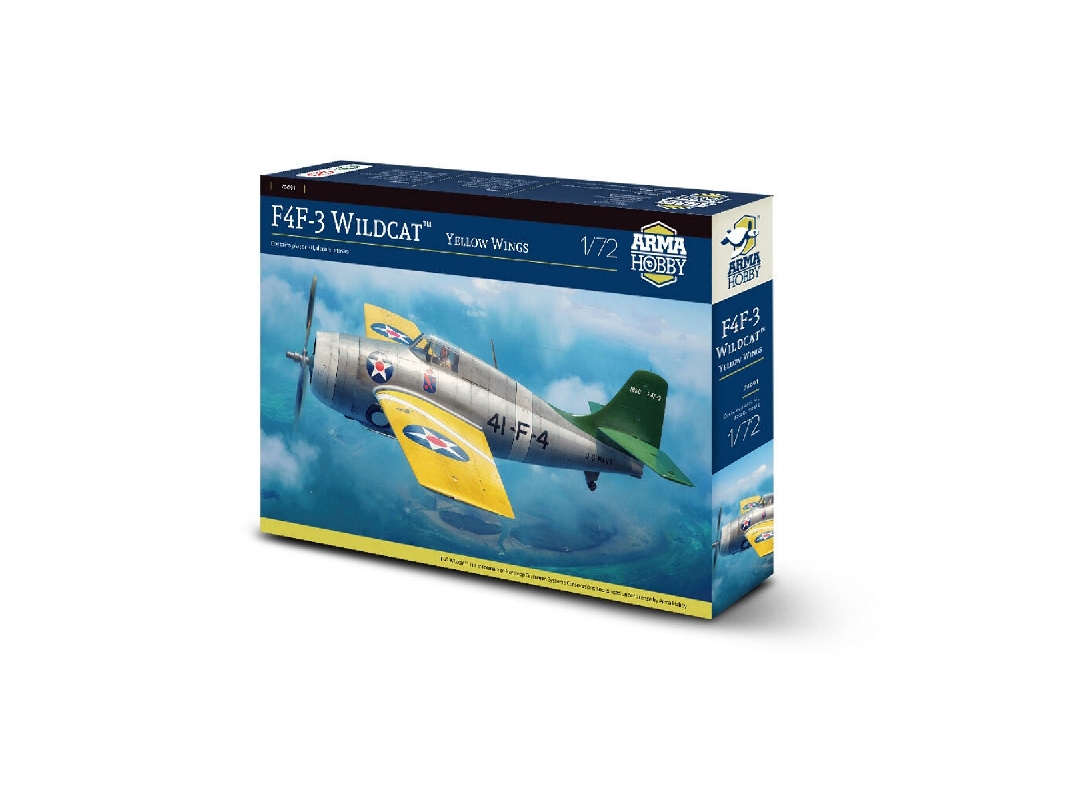

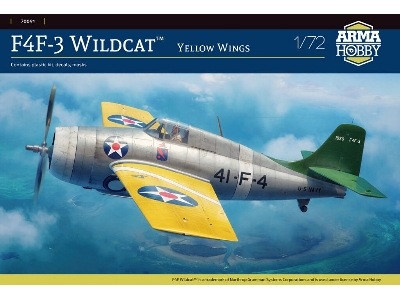
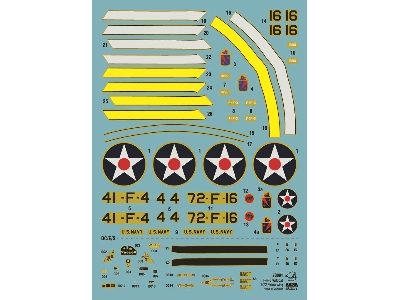
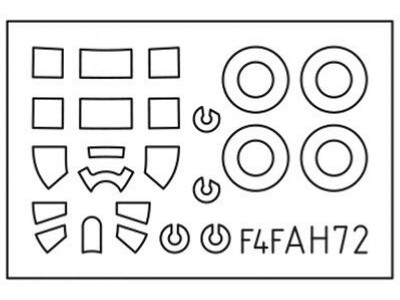
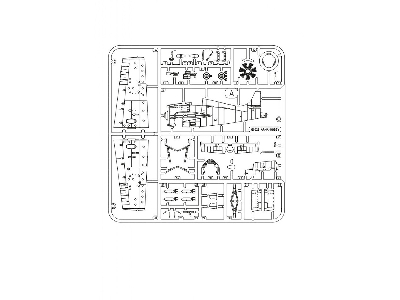
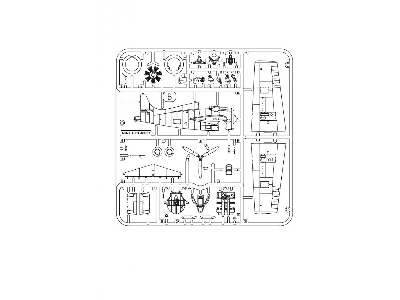
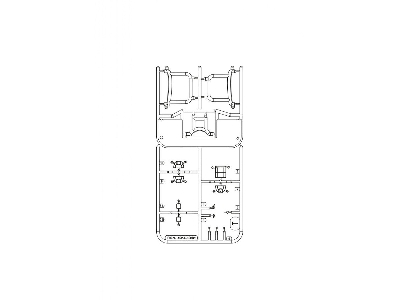
A 1/72 scale plastic model kit of the early Grumman F4F-3 Wildcat carrier-based fighter, used by the US Navy in the early 1940s. The kit allows you to recreate aircraft from a period when American naval aviation featured some particularly colourful paint schemes, with yellow wings, brightly coloured tails and contrasting squadron section markings.
The model has been designed from the ground up to represent the distinctive early Wildcats with fixed wings. The design takes into account differences between F4F-3 production batches, including variations in the engine cowling and cockpit glazing. Particular attention has been paid to the characteristic landing gear, designed to make assembly as straightforward and precise as possible.
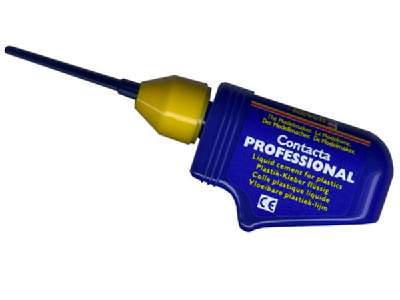
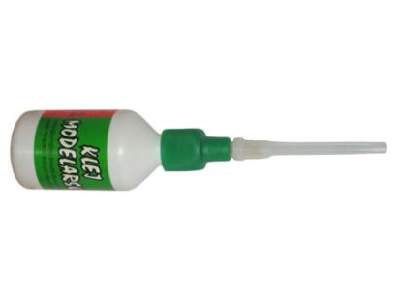
This model is intended for assembly and painting. Glue and paints are not included and must be purchased separately.
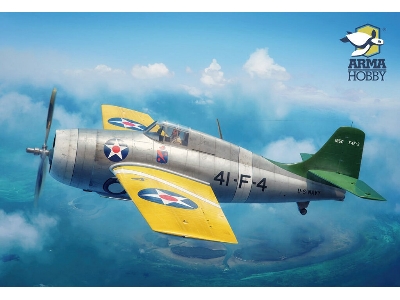
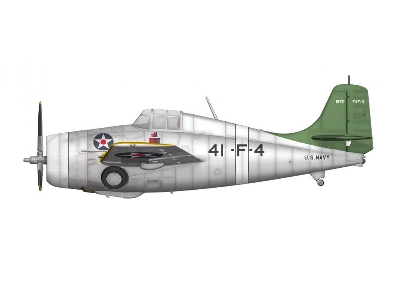
Grumman F4F-3 Wildcat, BuNo 1850, 41-F-4, VF-41, USS Ranger (CV-4), 1940
One of the first production Wildcats. Aircraft number 4 was the leader of the squadron’s second, “White” section. Accordingly, the engine cowling ring, fuselage band and wing chevrons were white with thin black outlines. The green tail identified the aircraft’s assignment to the carrier USS Ranger. Factory photographs show the aircraft with the earlier transitional code 4-F-4. At the time, VF-4 was being redesignated VF-41, and the number “1” was added to the code later.
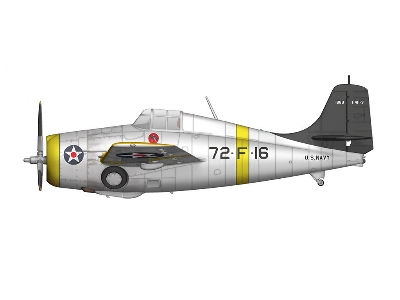
Grumman F4F-3 Wildcat, BuNo 1880, 72-F-16, VF-72, USS Wasp (CV-7), 1940–1941
The leader of the squadron’s sixth, “Yellow” section. The yellow engine cowling ring, fuselage band and wing chevrons identified the section leader, while the black tail indicated assignment to the carrier USS Wasp. The aircraft carried the full VF-72 markings, including the squadron’s distinctive emblem. Photographs of Wildcats from this unit during the period also show telescopic gunsights extending through the windscreen.
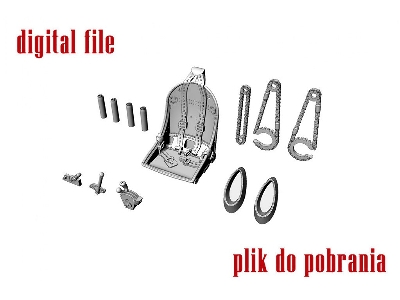
A free 3D file containing additional details for the F4F-3 model is available with the kit. The download code is provided in the instructions. The accessory set includes:
The file is intended for printing on a resin 3D printer. The consumer licence permits non-commercial use.
The Grumman F4F Wildcat was the US Navy’s principal carrier-based fighter during the early stages of the Pacific War. The early F4F-3 featured fixed wings, whereas later versions received folding wings to make aircraft storage aboard carriers easier. The Wildcat was a robust aircraft capable of withstanding considerable battle damage. Its strengths lay not only in its performance, but also in its durability and the effective tactics employed by its pilots.
The F4F-3 was powered by a Pratt & Whitney R-1830 Twin Wasp radial engine. Its armament consisted of four wing-mounted 12.7 mm machine guns. Compared with the Japanese Mitsubishi A6M Zero, the Wildcat was generally less manoeuvrable, but it could absorb damage well. Its pilots could also exploit its advantage in a dive and rely on coordinated team tactics.
In 1940, US naval aviation still used striking paint schemes, which were gradually replaced by more subdued camouflage colours as the war progressed. Colourful engine cowling rings, fuselage bands, wing chevrons and brightly painted tails helped distinguish individual aircraft and identify squadron sections. Early Wildcats therefore make an appealing modelling subject, combining a distinctive silhouette with rich and varied markings.

No carriers available for this product.
The above shipping costs are for 1 item only.
You will see the final shipping costs when you place your order.

Manufacturer
@COMMENT_COMMENT@
@COMMENT_COMMENT@


@COMMENT_TITLE@
@COMMENT_COMMENT@